
0%
Loading MARAFID
Loading MARAFID
This page covers the agricultural solutions that help supply feed and make better use of resources.
Preliminary planning indicators from the project study, not actual operating data.
Dry barley grain is turned over a 7-day growth cycle into fresh, easily digestible green fodder supplied to the herd daily, independent of the seasons. The station has three sprouting rooms plus a preparation room. The hydroponic figure is fresh weight, not dry matter, and does not fully replace conventional feed.
Details →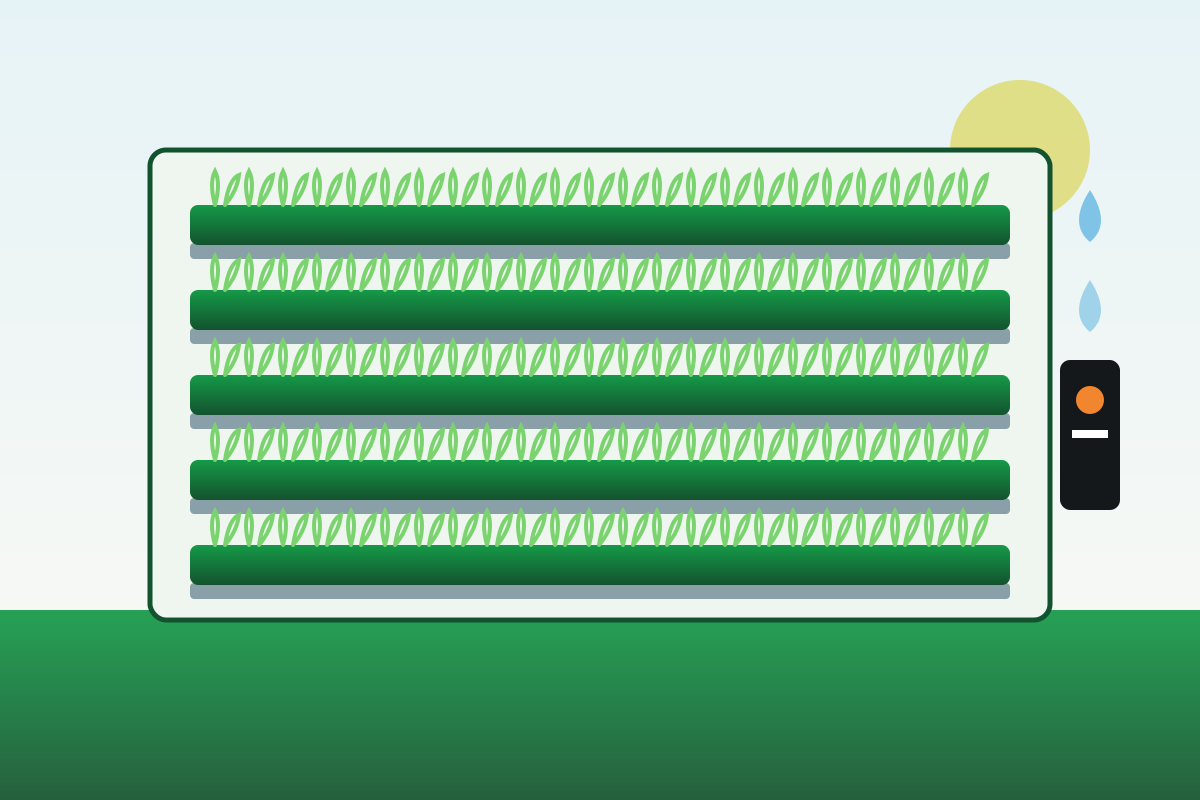
Corn silage is a fermented roughage valued for its nutritional content and digestibility. Sealed anaerobic fermentation lowers acidity and keeps quality stable after opening. It is often combined with protein sources such as sprouted barley to balance the ration.
Details →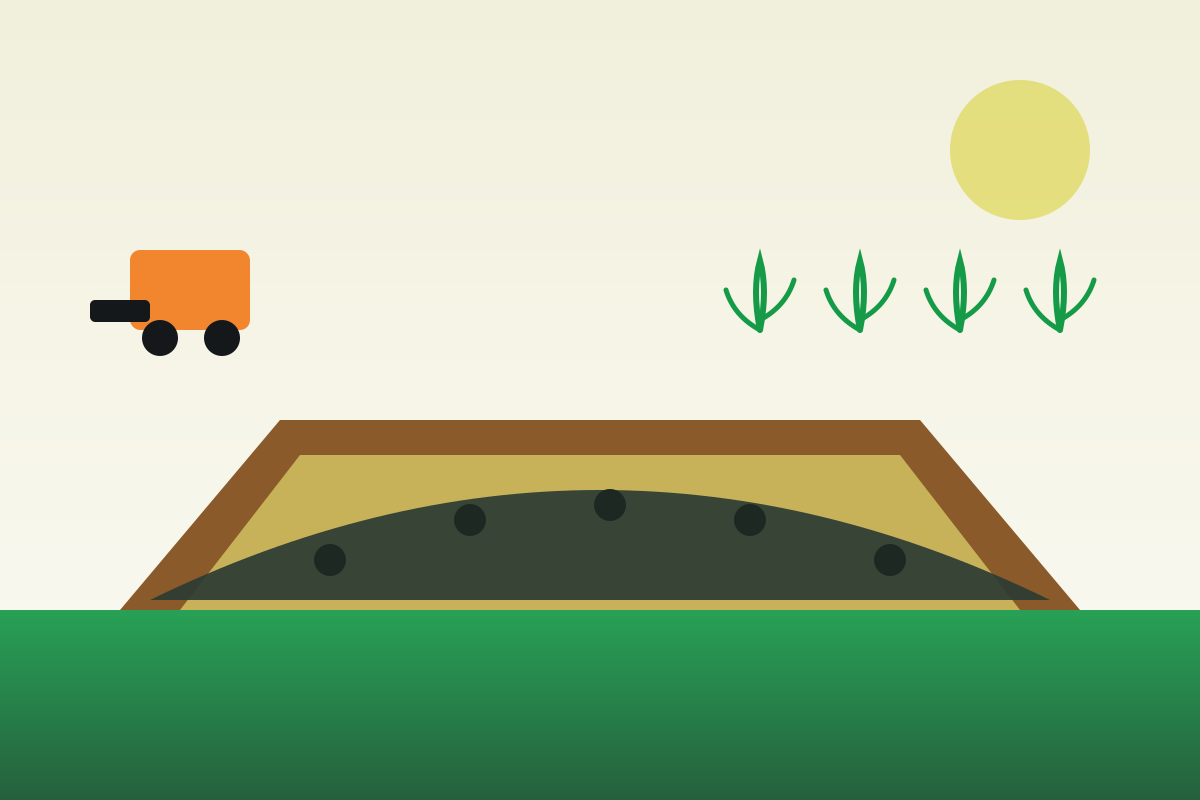
Mixing the ingredients gives a uniform ration, and analysing nutritional value and dry matter lets the ration be set against the herd’s needs and distributed accurately to the shelters. The project plans dry-feed storage, mixing and silos in one area.
Details →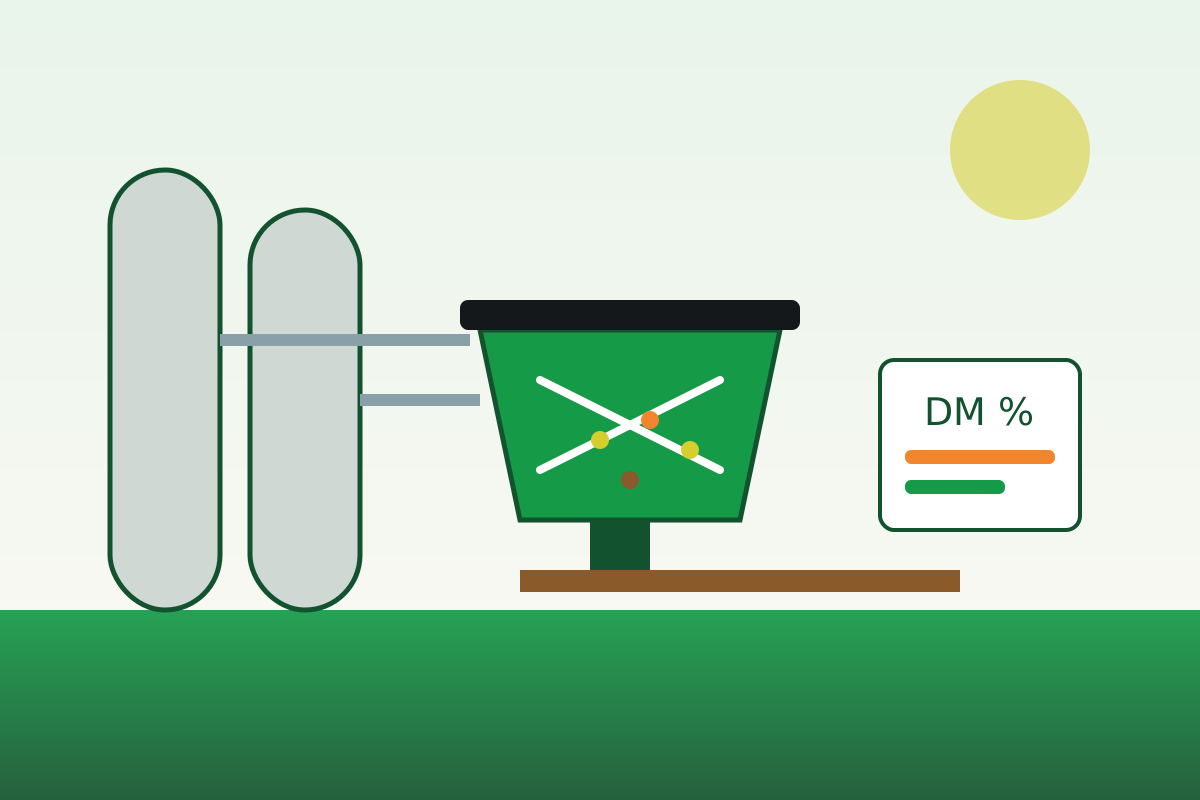
A protected-agriculture component that benefits from controlled growing conditions and is tied to the project’s overall resource management. Crops, production capacity and cycles will be published once approved by management.
Details →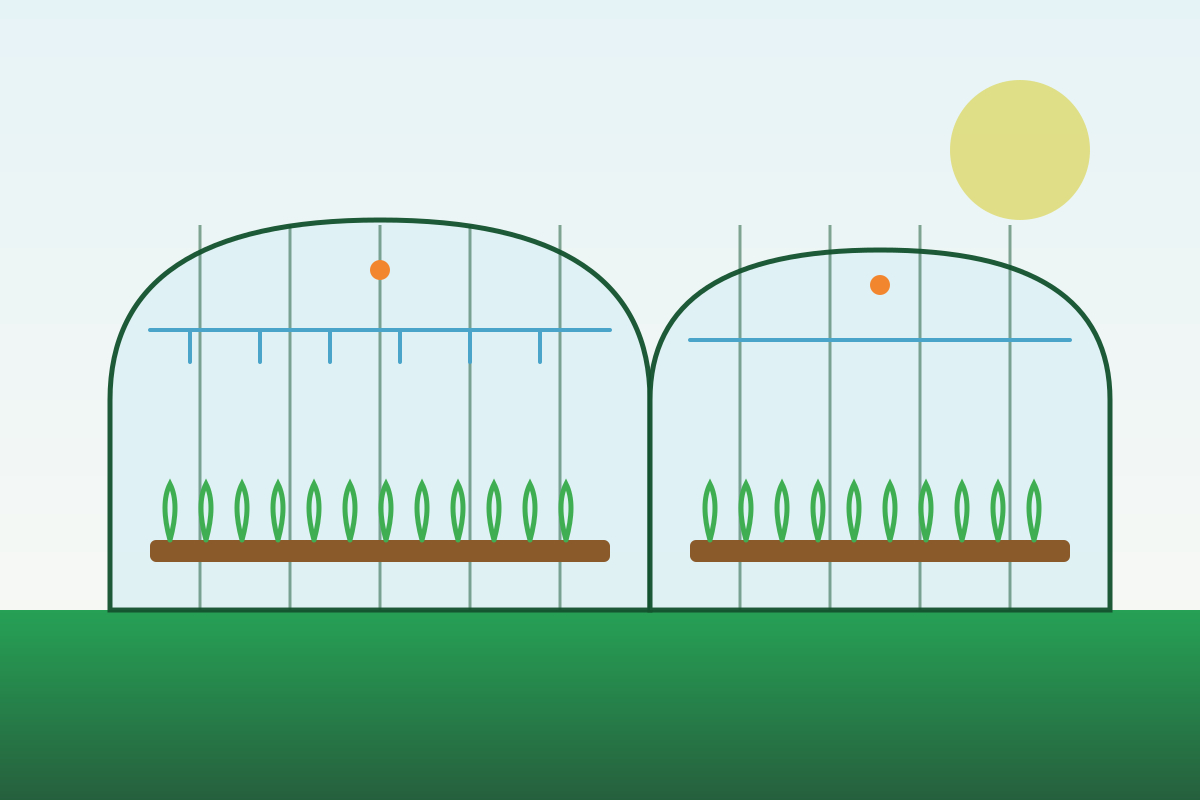
Fodder, silage and protected crops are planned next to the herd so that feed is supplied close to where it is used, while waste recovery and water management feed back into operations under the project’s circular-economy model.
Details →