To contribute to a more efficient and sustainable livestock production ecosystem that leverages technology and resource integration.

0%
Loading MARAFID
Loading MARAFID
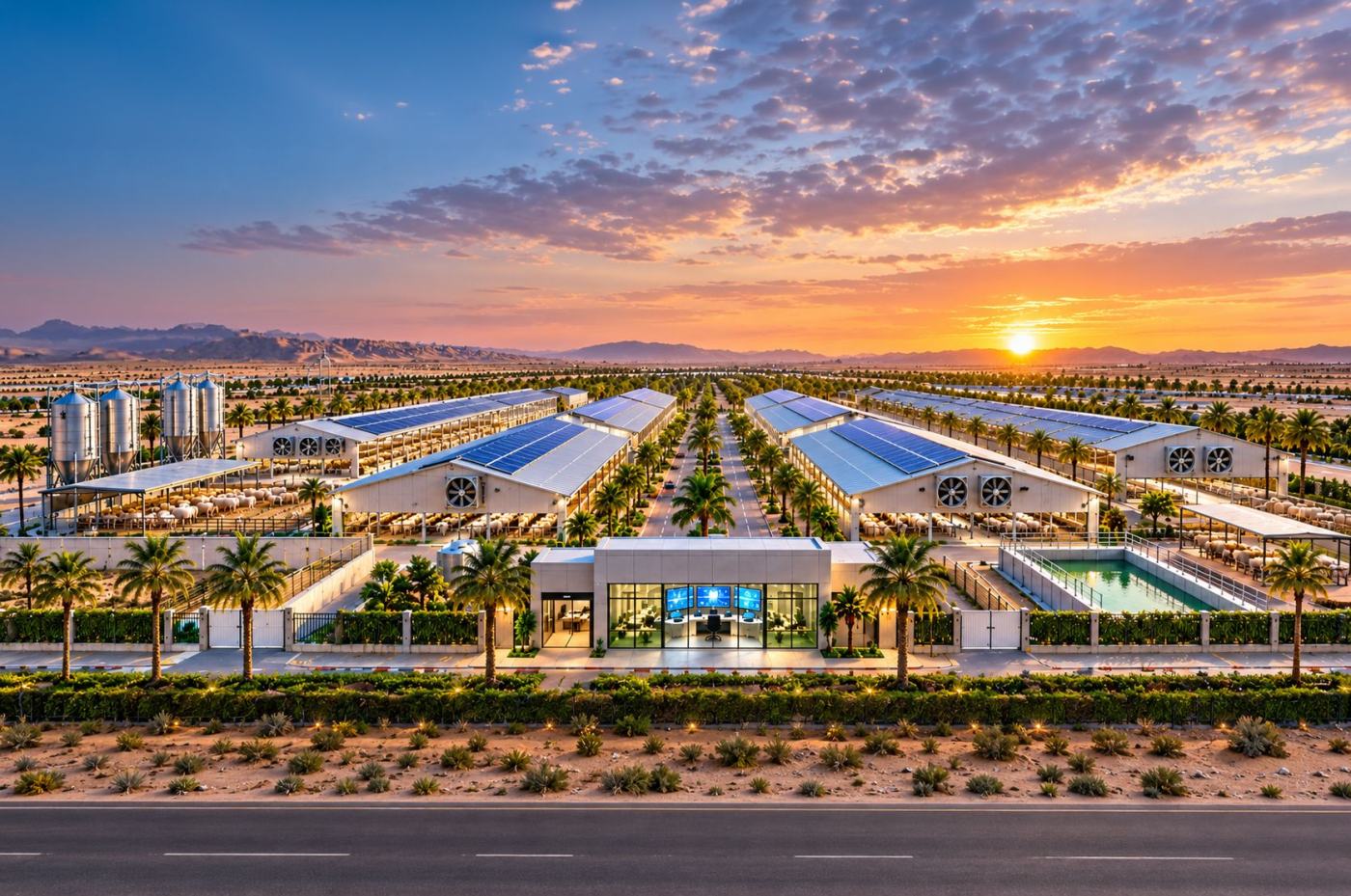
The Integrated Smart Shelters project aims to develop sheep-farming methods and farm management by linking animal production with agricultural, technical and environmental solutions in a single ecosystem.
The project relies on better herd management, organised feeding and veterinary care, more efficient use of water and energy, and making use of waste, alongside digital systems to track operations, costs, production and sales.
The model is built on the circular-economy concept, so the project's components integrate and support one another, opening opportunities to develop production, improve resource management and expand livestock-related activities.

Eng. Abdulghani Sharbaji leads MARAFID from its first idea through technical design and actual execution on site, through "Abdulghani Sharbaji & Partners for Food Security." He combines direct engineering oversight of the smart shelters and feed and energy stations with a long-term vision for building an interconnected, scalable livestock production model in Saudi Arabia.
The integrated smart sheep shelters project is a model for developing animal production by combining operating efficiency, modern technology and sustainable resource management. It aligns with the Kingdom's directions to strengthen food security, grow local production, improve water-use efficiency, and support investment and innovation in the agricultural and livestock sector.
Eight strategic pillars of the project's importance
Contributing to the supply of red meat through an organised local production system that diversifies food supply sources and strengthens the ability to meet market needs.
Linking sheep rearing, feed management, veterinary care, fattening and processing in one connected operating system, improving coordination between production stages.
Using precision feeding systems and hydroponically sprouted fodder where viable, with consumption monitoring and waste reduction, in line with the Kingdom's natural-resource challenges.
Using digital monitoring to follow the herd, feed use, growth indicators, health and costs, supporting operating decisions and better productivity.
Developing suitable routes to treat and use shelter waste, such as organic fertiliser once requirements are met, limiting environmental impact and supporting circular-economy principles.
Providing an organised environment for veterinary care, monitoring herd health, applying prevention and traceability procedures, and linking production to processing and cooling under the relevant regulations.
Offering a scalable investment model that opens room for partnership with investors, technology and feed suppliers, and veterinary, processing and distribution providers, according to project feasibility and market needs.
Establishing a system whose capacity and facilities can be developed in phases, measuring performance, cost, output and resource use to support operating sustainability and replication once feasibility is proven.
To contribute to a more efficient and sustainable livestock production ecosystem that leverages technology and resource integration.
To connect animal and agricultural production, veterinary services and digital solutions in a practical model that supports operations, growth and partnerships.
Develop sheep-farming methods and farm management.
Improve herd management and organise feeding and veterinary care.
Raise the efficiency of water and energy use.
Make use of waste and reduce losses.
Use digital systems to track operations, costs, production and sales.
Expand livestock-related activities and develop production.
MARAFID's model is circular: the outputs of one component become inputs for another. Feed is produced on site and feeds the smart shelters; their waste is collected automatically and routed to biological recycling, while solar power and water support the loop. Work is under way on all of these links.
Sprouted barley and corn silage produced within the project.
Work in progressFeeding and care of the herd in pens designed for hygiene and monitoring.
Work in progressUnder-floor scraping and drainage channels collect waste without direct handling.
Work in progressProcessing waste into usable products such as treated compost.
Work in progressOutputs return to production, supported by solar power and water supply.
Work in progressAll components of the project are being worked on now. They are grouped below into parallel implementation tracks; no approved timeline has been published yet.
Feasibility studies, technical consulting and technology solutions for livestock and agricultural production projects.
Preparing technical and operational feasibility studies for livestock and agricultural production projects, with a documented methodology that clearly separates technical analysis from financial data, published only after formal approval.
Consulting on smart shelter design, day-to-day farm operations, and feed and resource management, based on direct hands-on project execution experience.
Designing and integrating control, sensing, energy and smart-watering systems within livestock production facilities, supporting lower operating costs and gradually improved efficiency.
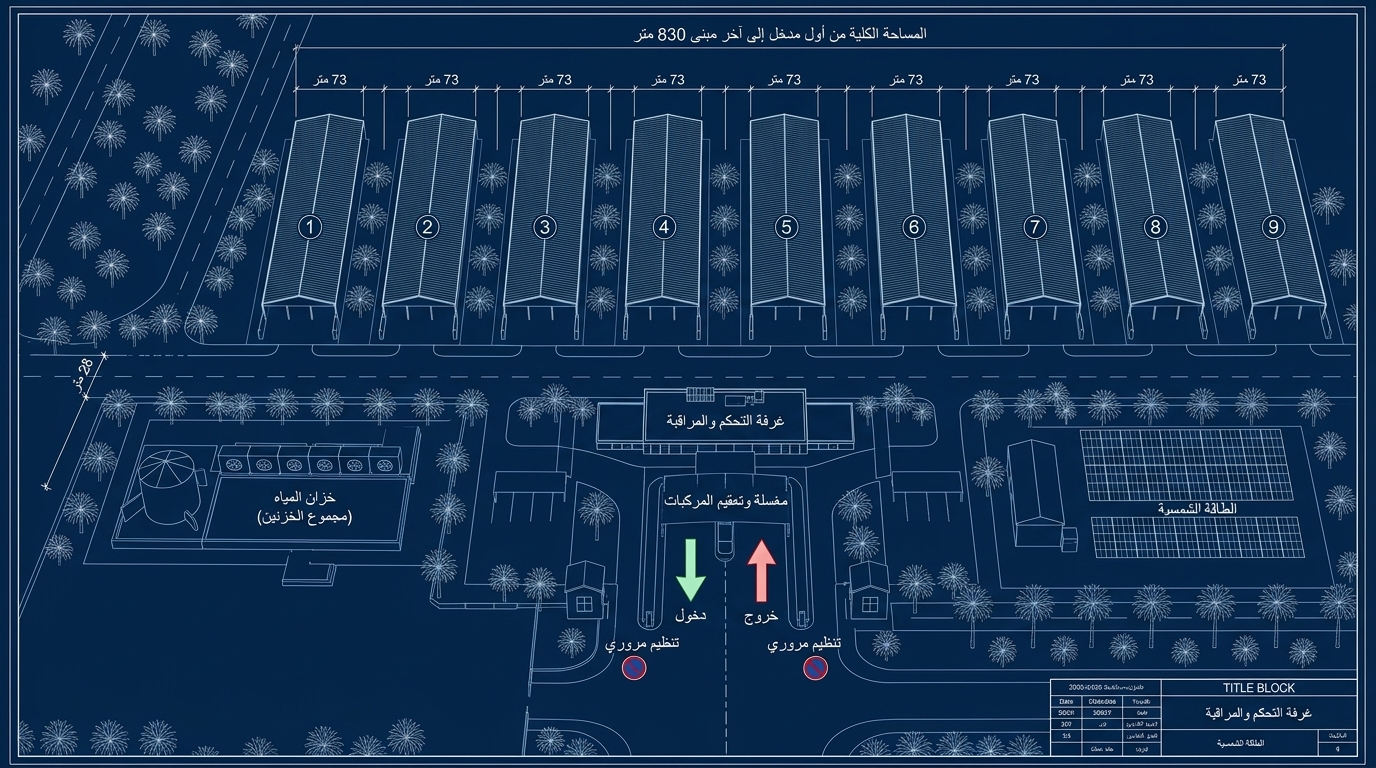
Exact site details will be published once formally approved by project management.
Each component's area is published on its own detail page within the ecosystem components.
Photos from field visits to reference sprouting stations, showing the racks, trays and the fresh sprouted barley.